MSCM Ltd chose Hiduron® 130 for the mechanical connection device in their subsea Stabplate assemblies, where high strength, galling resistance and seawater corrosion resistance are all essential.
The application
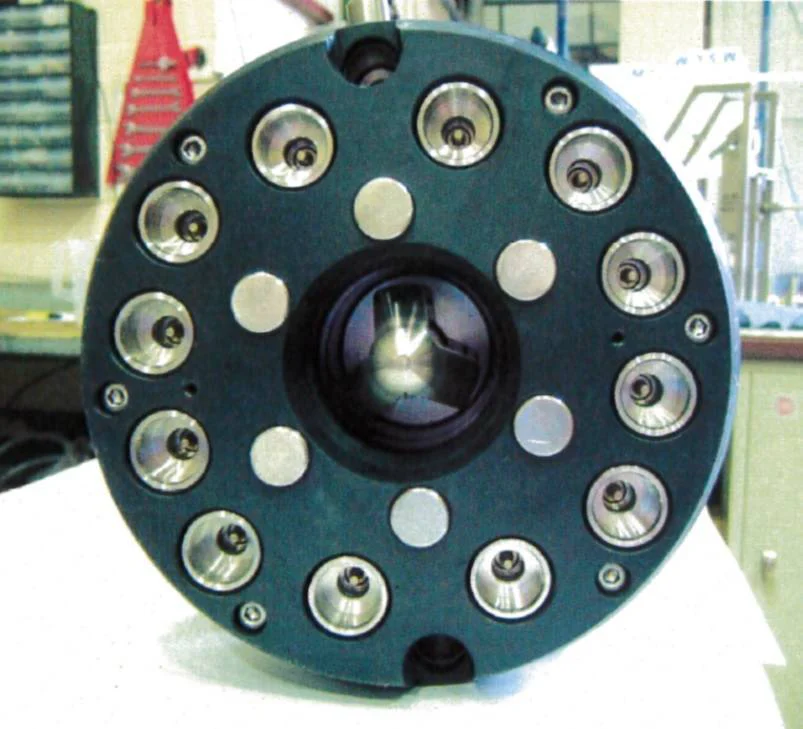
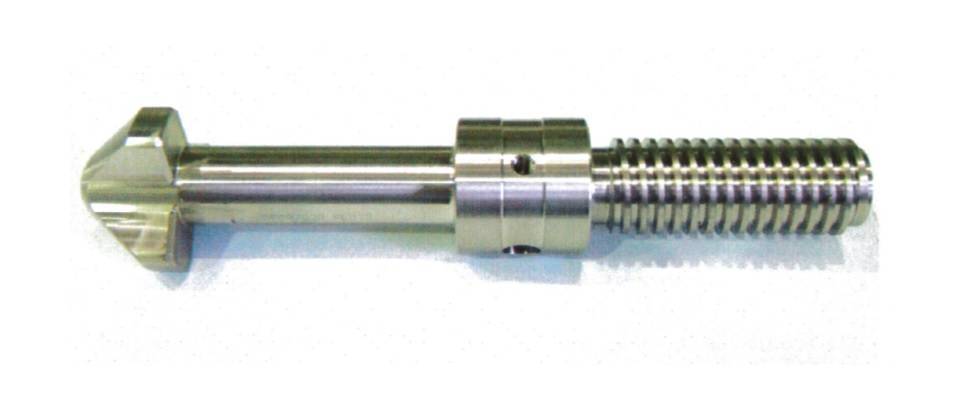
Connecting umbilicals to Christmas trees on the ocean floor is a challenging task in offshore oil and gas production. The UK-based company MSCM Ltd has designed and manufactured subsea connectors for many years. One of their most popular products is the Stabplate Assembly ROV Fly-To Place, where a remote operated vehicle (ROV) brings together the male and female parts of the stabplate and multiple umbilical connections are made within a single unit. Once the couplings are aligned, the ROV operates the mechanical connection device with its torque tool, connecting the stabplate halves with enough pre-load to prevent separation under pressure loading.
Material requirements
The stabplate design calls for a demanding set of material properties:
- The umbilical lines may operate at fluid pressures up to 17,500psi, requiring a high-strength mechanical connection.
- The combination of pressure and friction on the mechanical connection device makes galling - where metal components stick or fuse together - a significant risk.
- The device must also resist seawater corrosion and marine bio-fouling.
Hiduron® 130, a high-strength cupronickel, meets the requirements for strength, non-galling and corrosion resistance, and is easier to machine than many other high-strength alloys. It is not susceptible to embrittlement by the hydrogen generated during cathodic protection, and it is galvanically compatible with the other materials in the stabplate assembly.
This unique combination of properties is widely exploited across many demanding applications.