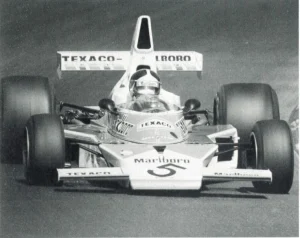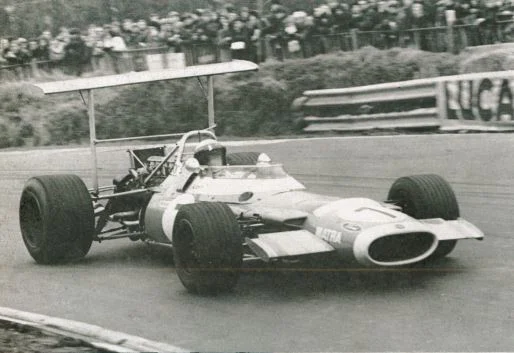
Cosworth chose Hiduron® bronze for the valve seat inserts and Hidurel® 5 for the valve guides in its Formula 1 and Formula 2 racing engines, where both materials performed reliably under extreme, sustained stress.
In the late 1960s, British racing cars and drivers dominated Formula 1 and Formula 2. Of the eleven international Grand Prix races in 1969, Cosworth-Ford engine cars took all of the first three places in every event except the third places in the Dutch and American Grands Prix, and were equally successful in Formula 2.
These are remarkable results. In Formula 1, Cosworth engines of only 3 litres produced some 400BHP, and in a Grand Prix of around 300 miles ran at close to maximum output for most of the race. Only the finest workmanship and materials could survive such concentrated stressing, with every component performing reliably.
Cosworth Engines Ltd. chose Hiduron® bronze for the valve seat inserts and Hidurel® 5 (UNS C64711, DIN 2.0855, DTD 498) for the valve guides. Both succeeded in these high-performance engines.
Why these alloys perform
The valve seat inserts hold an effective, reliable seat face over long periods despite severe oxidation from hot corrosive exhaust gases and the continuous hammering of the valves. This comes from the alloy's good resistance to oxidation, corrosion and wear, its high thermal conductivity - which lowers operating temperatures by dissipating heat efficiently - and a high coefficient of expansion well suited to aluminium cylinder heads.
Hidurel® 5 shares many of these qualities and has the good anti-frictional properties essential in valve guide material. Langley materials have played an important role in British racing, with Hidurel® 5 used in Cosworth engines fitted to cars from firms such as Lotus, McLaren, Matra and Brabham.